

Using a pendulum is a simple yet versatile practice that can be employed for various purposes, such as divination, decision-making, and energy work. A pendulum is typically a weighted object attached to a string or chain, allowing it to swing freely. Here’s a step-by-step guide on how to use a pendulum effectively:
1. Select the Right Pendulum:
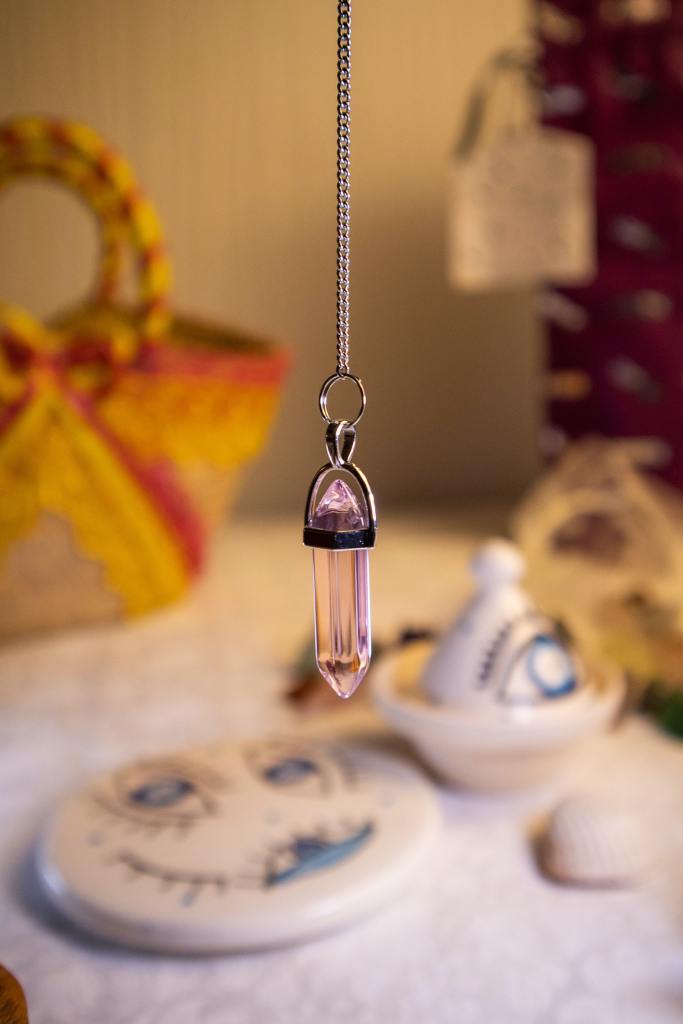
- Choose a pendulum that resonates with you. You can purchase one or make your own using a crystal, metal, or any material that feels right for you. The weight should be balanced and comfortable to hold.
2. Prepare the Environment:
- Find a quiet and peaceful space where you won’t be disturbed. It’s essential to create a calm and focused atmosphere for accurate pendulum use.
3. Clear Your Mind:
- Before you begin, take a few moments to center yourself. Relax, clear your mind of distractions, and set your intention for using the pendulum. Whether it’s seeking guidance or answering a specific question, having a clear objective will enhance your results.
4. Establish a Baseline:
- To use a pendulum effectively, you need to establish a baseline response. Hold the pendulum by its chain or string between your thumb and forefinger. Allow it to hang freely without touching anything. Observe its natural movement, which may be a slight sway or rotation. This is your pendulum’s neutral or resting position.
5. Ask Yes/No Questions:

- Begin with simple yes/no questions to practice and establish a connection with your pendulum. You can start with questions you already know the answers to, such as your name or favorite color, to confirm the pendulum’s response. Typically, a back-and-forth swing is considered a “yes” response, while a side-to-side motion is a “no” response. However, the specific movements can vary among individuals, so it’s crucial to clarify your pendulum’s responses.
6. Calibrate for Maybe/Neutral:
- In addition to yes and no, you can calibrate your pendulum to indicate a “maybe” or “neutral” response. To do this, ask a question that you know falls in this category, like “Is it raining outside?” Observe the pendulum’s movement, and make a mental note of what indicates neutrality or uncertainty.
7. Focus and Concentration:
- When asking more significant or specific questions, maintain your focus and concentration. Hold the pendulum steady and ask your question clearly in your mind or out loud.
8. Interpret the Responses:
- Pay attention to the pendulum’s movements. Trust your intuition and the responses you’ve calibrated. Interpret the swings or rotations as your pendulum’s way of providing answers. Remember that pendulum responses are influenced by your subconscious mind and energy, so it’s essential to be open and receptive.
9. Keep a Pendulum Journal:

- Maintaining a pendulum journal can be helpful for tracking your questions, responses, and the accuracy of your pendulum readings over time. This journal can also serve as a valuable reference for future sessions.
10. Practice and Experiment:
- Like any skill, using a pendulum becomes more accurate with practice. Experiment with different types of questions and scenarios. As you become more comfortable, you can use your pendulum for decision-making, energy clearing, or gaining insight into various aspects of your life.
11. Cleanse and Energize Your Pendulum:
- Pendulums can absorb energy from their surroundings, so it’s important to cleanse and energize them regularly. You can do this by placing your pendulum in direct sunlight or moonlight, using cleansing crystals like clear quartz, or simply running it through incense smoke.
In summary, using a pendulum is a straightforward yet effective way to access your intuition, gain insight, and make decisions. With practice, patience, and a clear intention, you can harness the power of the pendulum to enhance your understanding of various aspects of your life. Remember that the key to successful pendulum use lies in establishing a connection, maintaining focus, and trusting your inner wisdom.
 Welcome