

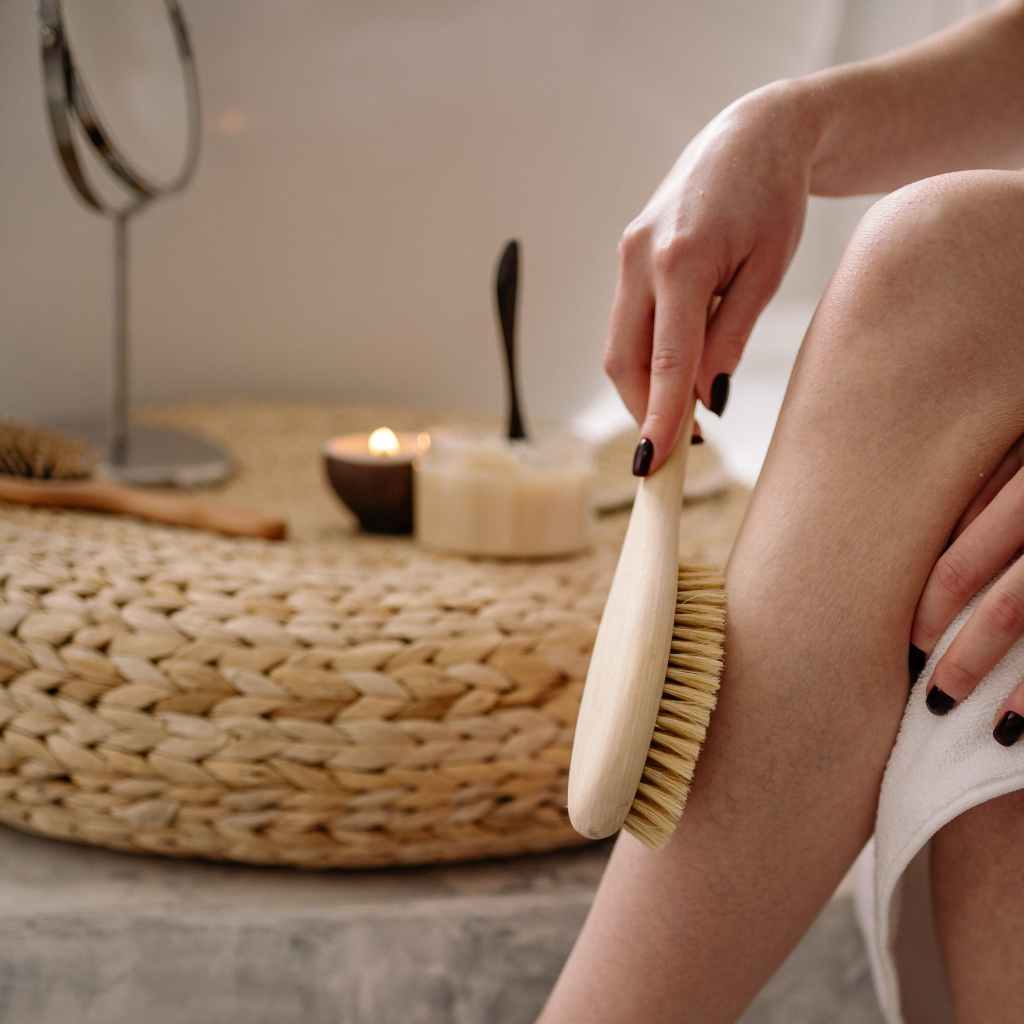
Dry brushing is a skincare and self-care practice that involves using a dry, natural-bristle brush to gently massage and exfoliate the skin. While it has gained popularity in recent years as a potential way to improve skin health and overall well-being, the scientific evidence supporting its effectiveness is limited. Nevertheless, many people find dry brushing to be a relaxing and invigorating addition to their skincare routines. To understand how dry brushing works, let’s explore its purported benefits and the techniques involved.
The Process:
- Brush Selection: Dry brushing typically starts with choosing the right brush. A natural bristle brush with a long handle for easy reach is commonly used. The bristles should be firm but not too hard to avoid skin irritation.
- Dry Skin: Dry brushing should be performed on dry, unmoisturized skin. It is usually done before a shower or bath to remove the exfoliated skin cells.
- Brushing Technique: The brushing technique involves gently stroking the skin in upward or circular motions, always moving towards the heart. For example, when dry brushing the legs, you would brush from the ankles up toward the thighs.

Purported Benefits of Dry Brushing:
- Exfoliation: Dry brushing helps remove dead skin cells from the skin’s surface, which can leave the skin feeling smoother and looking brighter.
- Circulation: The massaging motion of dry brushing is thought to stimulate blood flow and lymphatic drainage, potentially reducing the appearance of cellulite and promoting overall skin health.
- Lymphatic System: Advocates of dry brushing claim that it helps the lymphatic system by aiding the body’s natural detoxification process. The lymphatic system is responsible for removing waste and toxins from the body.
- Skin Health: Dry brushing is believed to help unclog pores, reduce ingrown hairs, and promote even skin tone.
- Relaxation: Many people find dry brushing to be a soothing and meditative practice, as it encourages mindfulness and self-care.
It’s important to note that the scientific evidence supporting these benefits is limited, and more research is needed to substantiate these claims.
The Skepticism:
While dry brushing has gained popularity, it remains a contentious practice in the medical and dermatological communities. Some dermatologists and healthcare professionals raise concerns about the potential risks and lack of concrete evidence. Here are some considerations:
- Skin Sensitivity: Dry brushing may not be suitable for individuals with sensitive or easily irritated skin. It can lead to redness, irritation, or even micro-tears in the skin if not done gently.
- Lack of Scientific Evidence: Many of the purported benefits of dry brushing lack rigorous scientific validation. The claims about lymphatic system support and detoxification, in particular, are not substantiated by robust research.
- Potential Overuse: Overly aggressive or frequent dry brushing can harm the skin, disrupt the skin barrier, and lead to inflammation.
- Individual Variability: Dry brushing effects may vary from person to person. What works for one individual might not produce the same results for another.
In conclusion, dry brushing is a skincare and self-care practice that involves gently massaging the skin with a dry, natural-bristle brush. It is believed to offer benefits such as exfoliation, improved circulation, and potential lymphatic system support, but the scientific evidence is limited. The key to safe and effective dry brushing is to do it gently, avoid overuse, and be mindful of your skin’s sensitivity. It’s advisable to consult with a dermatologist or healthcare professional before incorporating dry brushing into your skincare routine, especially if you have pre-existing skin conditions or concerns.
Sources:
Photo by Yan Krukau: https://www.pexels.com/photo/photograph-of-a-woman-with-a-white-towel-using-a-brush-on-her-legs-7020253/
Like to see more content like this?
Follow us on our social media so you don’t miss out on more health tips!
 Welcome